
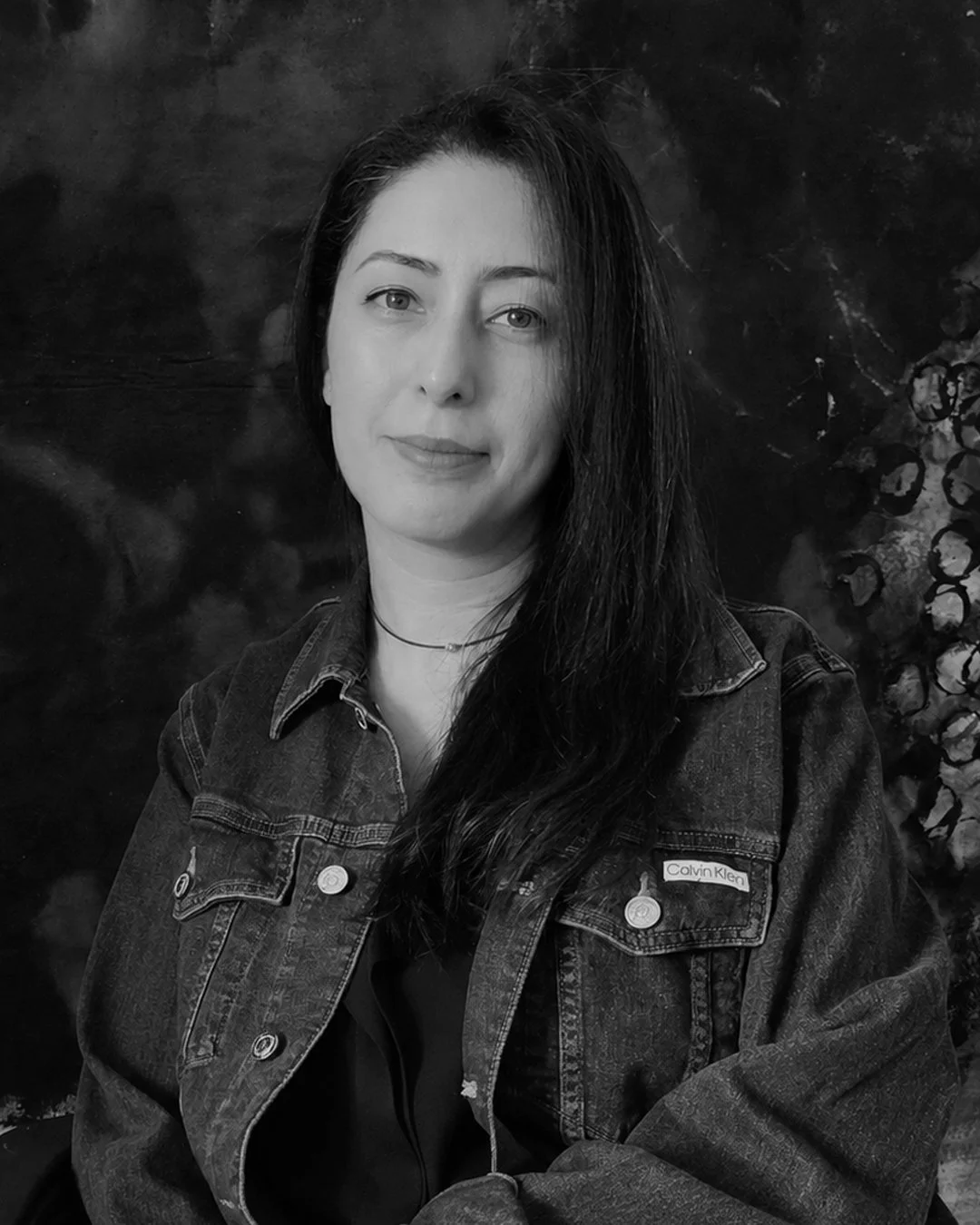
Golriz Rezvani
My practice moves between installation, sculpture, painting, and drawing, with a focus on material experimentation. I work with familiar materials that carry social, domestic, bodily, and cultural associations, including bread, fabric, cardboard, furniture, and found objects. I am interested in how these materials hold memory, pressure, use, damage, and transformation.
For this project, I am using language as a central material in relation to physical objects. Rather than using text only to explain the work, I approach language as something that can act on a material situation. It can instruct, label, interrupt, or create pressure. At the same time, the material conditions of the work change how the language is read. A word or phrase can become unstable when it meets an object, a surface, a corner, a fold, or a point of resistance.
This approach is shaped by historical and contemporary uses of language in art, including Yoko Ono’s Grapefruit, where simple instructions become poetic, conceptual, and sometimes impossible actions. I am interested in language in this way: not only as communication, but as a situation that asks something of the material. The instructions and fragments in the work create a form of pressure, while the materials respond through bending, blocking, displacement, reflection, or interruption.
Bread has been part of my practice for the past two years, but its role continues to shift. At different moments, I have used it as a bodily form, a structural force, a trace, or a residue. I return to bread because it is both ordinary and unstable. It is connected to nourishment and survival, but also to decay, burning, hardening, and change. In this project, bread does not function as the central subject. It appears more like a memory or residue of an event: something left behind by pressure, movement, or transformation.
The cardboard box is another important material in this installation. It functions as an object, a container, and a temporary structure. Boxes are used to pack belongings, carry what can be moved, and store what cannot yet be placed. For me, the box carries associations with immigration, uncertainty, and transition. It is both a practical container and a suspended space between one life and another. Some things remain in boxes for years, waiting for a future use, a stable place, or a decision that has not yet been made.
I chose to work with the terms and conditions of instability, plasticity, pressure, and transformation because they connect directly to how I am thinking about both language and material in this project. The materials do not illustrate the language, and the language does not fully explain the materials. Instead, they press against each other. Through this installation, transformation becomes physical, linguistic, and lived.
About the Artist
Golriz Rezvani is an Iranian-Canadian artist working across painting, drawing, video,installation, and readymade forms. Her recent practice uses bread as a central sculptural material, placing it in relation to domestic objects, architectural fragments, and constructed environments.
Rezvani holds Bachelor’s and Master’s degrees in Fine Arts from Iran and completed her Master of Fine Arts at the University of British Columbia in 2026. Alongside her artistic practice, she has taught at Emily Carr University and Vancouver Film School in Vancouver, and previously at the Alberta University of the Arts in Calgary. She received a Graduate Scholarship from SSHRC in 2024.