
Maya River
The works submitted for Plasticity explore transformation as an ongoing state of becoming.
At the center of the installation is a vessel that appears to have developed its own agency. Historically, vessels have functioned as containers, objects designed to hold, preserve, and carry. In this work, however, the vessel begins to shift beyond its traditional role. It acquires legs, root-like fibers, and organic extensions that suggest movement, adaptation, and life. It appears capable of standing, leaving, or continuing its own evolution, while remaining grounded in the memory of its original form.
Surrounding the vessel is a constellation of wall-mounted sculptural forms inspired by seeds, fossils, geological formations, and imagined artifacts. Individually, they appear as distinct entities; together, they suggest a larger interconnected system. The installation draws from my ongoing fascination with what exists beneath the surface: roots beneath vineyards, caves beneath mountains, forgotten histories beneath landscapes, and the invisible networks that connect living beings.
Growing up in southern Iran, many of my earliest memories were formed while exploring the Zagros Mountains, ancient sites, vineyards, and cave systems with my family. During seasonal pruning in my father's vineyard, I became fascinated by the exposed roots of grapevines and the hidden structures that connected seemingly separate plants underground. These experiences nurtured an early awareness of the unseen relationships that shape both natural and human systems. Encounters with ancient Persian landscapes, mythology, and sacred sites, including the Cave of Shapur I and archaeological remnants throughout the region, deepened this fascination and fostered a lasting interest in how memory, nature, and cultural narratives become embedded within place. My practice is also informed by ancient Persian mythology and Zoroastrian traditions, particularly the understanding that water, earth, fire, and living
landscapes are sacred rather than separate from spirituality, an outlook that continues to influence the way I approach material, form, and storytelling.
Created from discarded paper transformed through labor-intensive, low-waste processes, these works embody material plasticity while exploring broader questions of transformation and identity. The sculptures exist between artifact and organism, relic and living presence. They retain traces of what they once were while continually becoming something new.
About the Artist
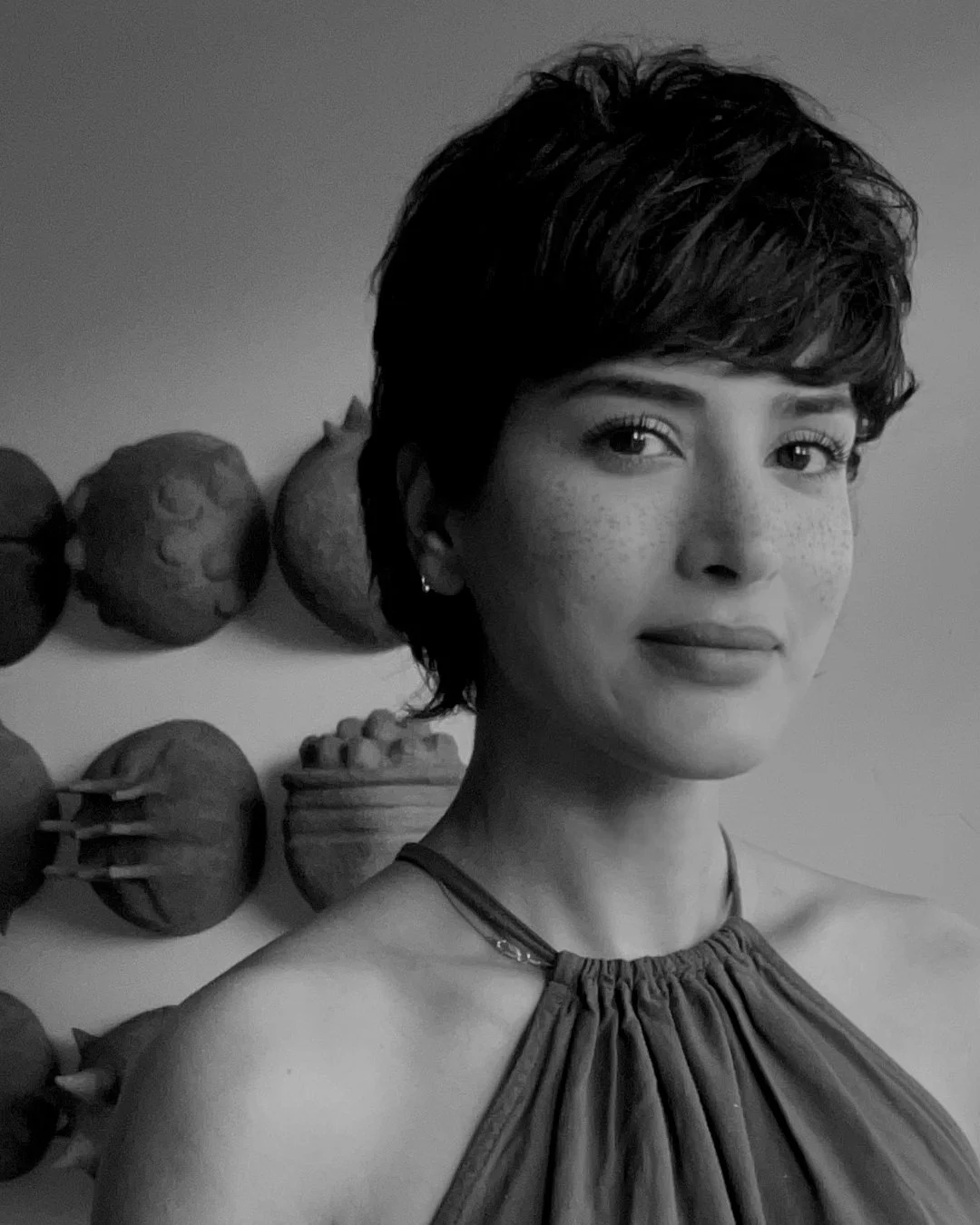
Maya River is a Vancouver-based self-taught sculptor and founder of PaperVivant, a creative practice dedicated to transforming discarded paper into sculptural forms through low-waste, environmentally conscious processes. Working primarily with upcycled paper pulp and natural binders, she creates vessels, wall installations, and organic sculptures that explore memory, transformation, and humanity's relationship with the natural world.
Born in Fars, Iran, River's artistic language is deeply informed by childhood experiences exploring the landscapes of southern Iran, including the Zagros Mountains, vineyards, caves, and archaeological sites.
Inspired by Persian mythology and sacred sites that carry cultural memory and history, River reimagines forms that evoke artifacts, organisms, and relics. Juxtaposing impressions of past and future within her work, she explores connections between the human and natural worlds.
Before establishing her full-time art practice, River spent more than a decade working in project management within industrial sectors. Since 2022, she has focused on sculpture and material experimentation, developing a distinctive process that transforms reclaimed paper into tactile forms that evoke stone, earth, roots, geological formations, and fossils from unseen worlds.
Her work has been exhibited in Canada, sold internationally, and featured in design publications across Europe and North America.