
VIVA Alliance Statement
Lunar New Year is a time for renewal, when spring yawns awake and guides us towards new beginnings. In Asian traditions, rebirth is a significant concept in the cycle of life. During this time, when we light the lanterns and gather together to welcome the new year, we also prepare ourselves for new connections and resolutions.
This year, The Lantern City has formed a new collaboration with VIVA Alliance. Through the sharing of arts and stories, we invite the city to Brave the Wind in the Year of the Horse. Lantern traditions center on light as a gesture of intention and renewal in times of transition; this year’s series of lantern artworks carries this legacy forward through the energy of continuity and community in the year ahead.
VIVA Alliance is a Vancouver-based Iranian Visual Arts non-profit organization dedicated to intercultural dialogue, working to create platforms for artists and communities through exhibitions and public-facing programming. As an Art Partner with Lantern City, VIVA Alliance is proud to present the work of Iranian-Canadian artists to Vancouver’s diverse public audiences as part of this shared public celebration.
Participating Artists
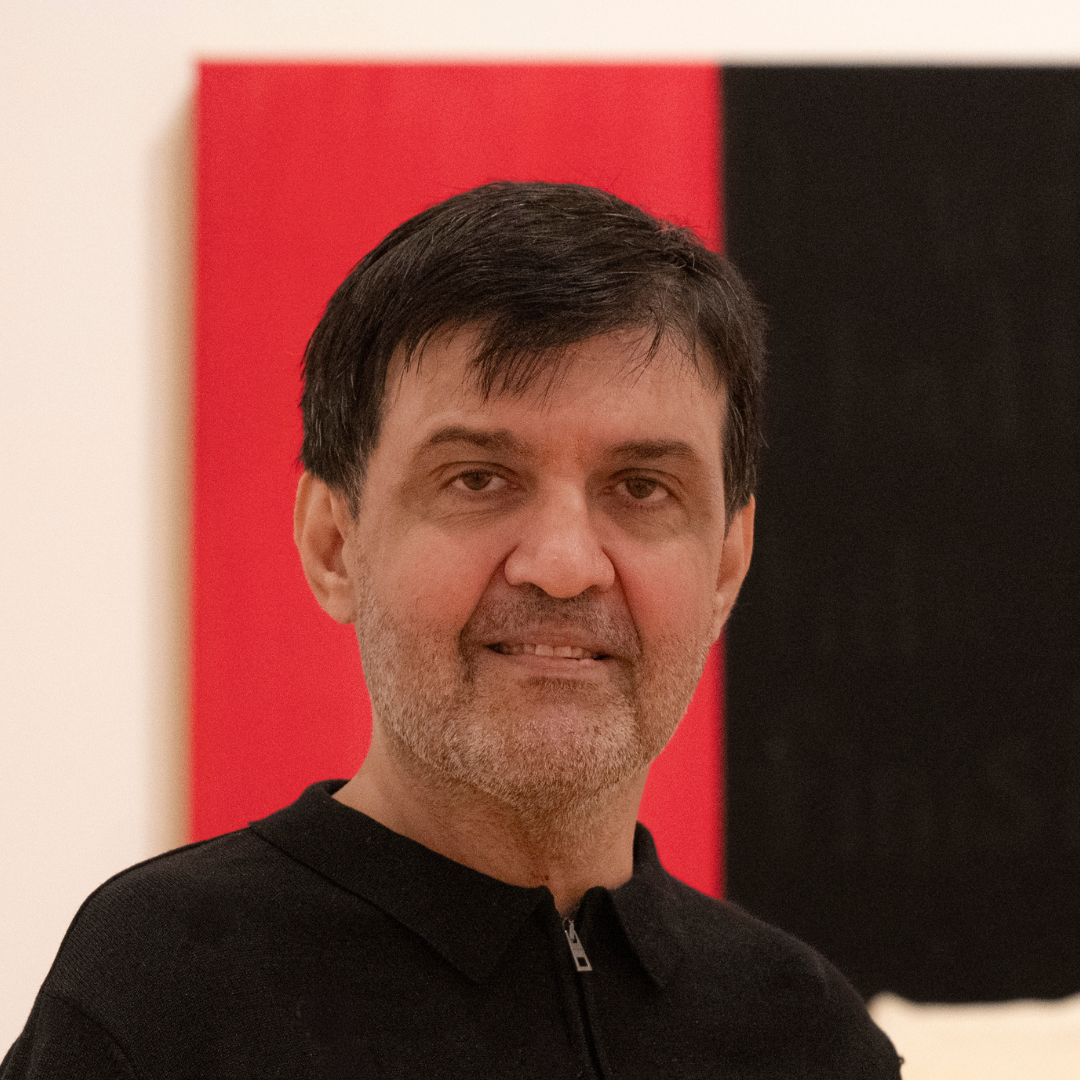
Mohsen Khalili (b. 1966, Tehran) is an Iranian Canadian multidisciplinary conceptual artist based in Vancouver, British Columbia. Over a career spanning more than three decades, Khalili’s work has been exhibited widely across Canada and internationally, including in the United States, Iran, Japan, Taiwan, and Kuwait.
Khalili’s practice is deeply informed by his lived experiences of displacement, physical disability, and isolation. His paintings and sculptures often explore disparate visual elements that struggle to belong, function, or communicate within a larger structural framework. While his work is situated in dialogue with multiple artistic traditions and techniques, Khalili’s creative process remains instinctive and materially driven.
Drawing on a wide range of artistic disciplines and mediums, Khalili focuses on constructing an inclusive visual language that emphasizes the universality of the experiences and anxieties present in his work—offering viewers a space for collective catharsis and shared understanding.
Artist image: Courtesy of VIVA Alliance. Two Rivers Gallery, Prince George, BC. Photo by Focal Point Studios.
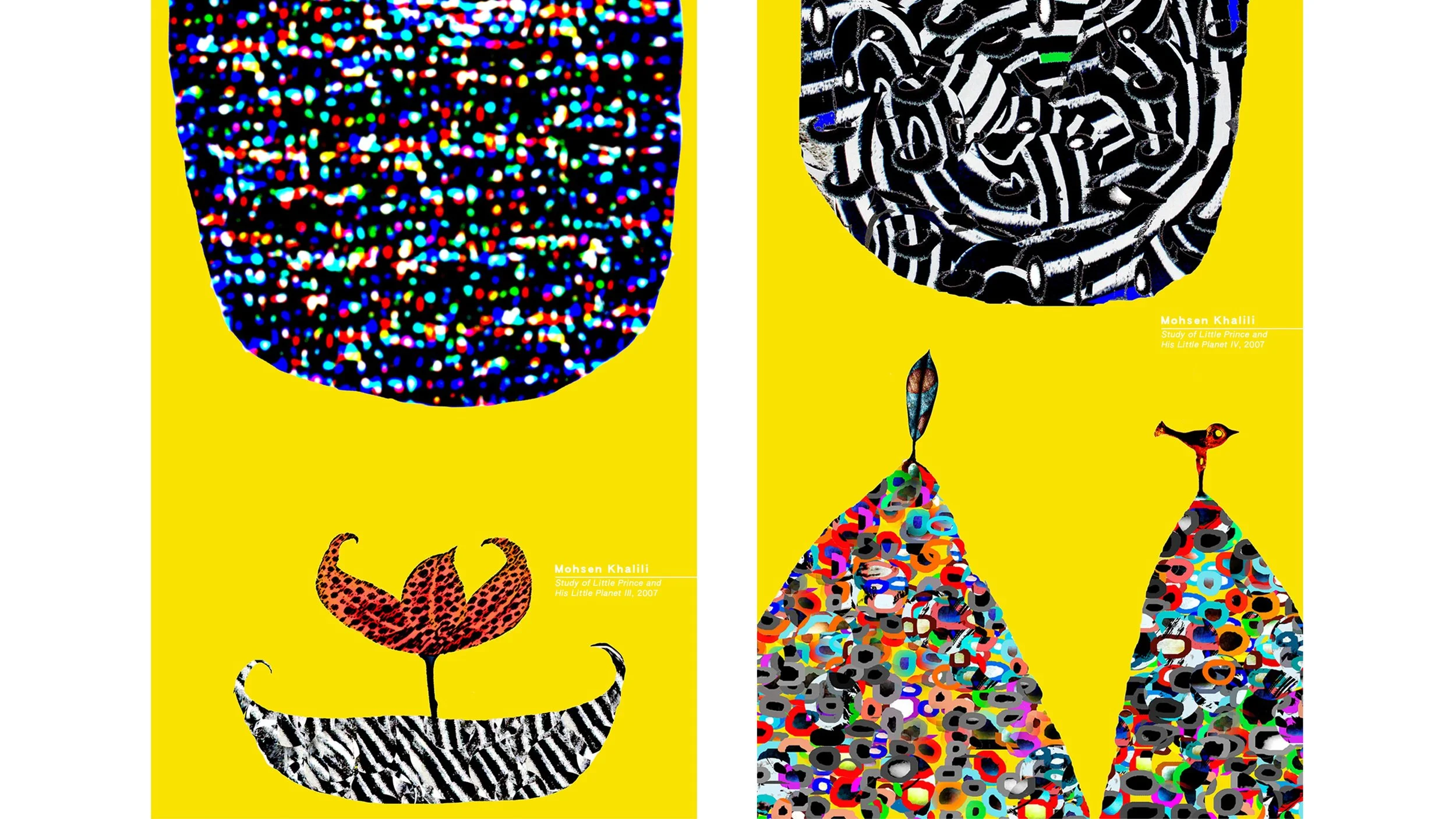
The works presented at Lantern City for Lunar Fest belong to a series entitled Planets Visited by the Little Prince (2013–2019). Inspired by Antoine de Saint-Exupéry’s celebrated novella The Little Prince, this work explores themes of loneliness, the joy and burden of creativity, and the longing for understanding and connection.
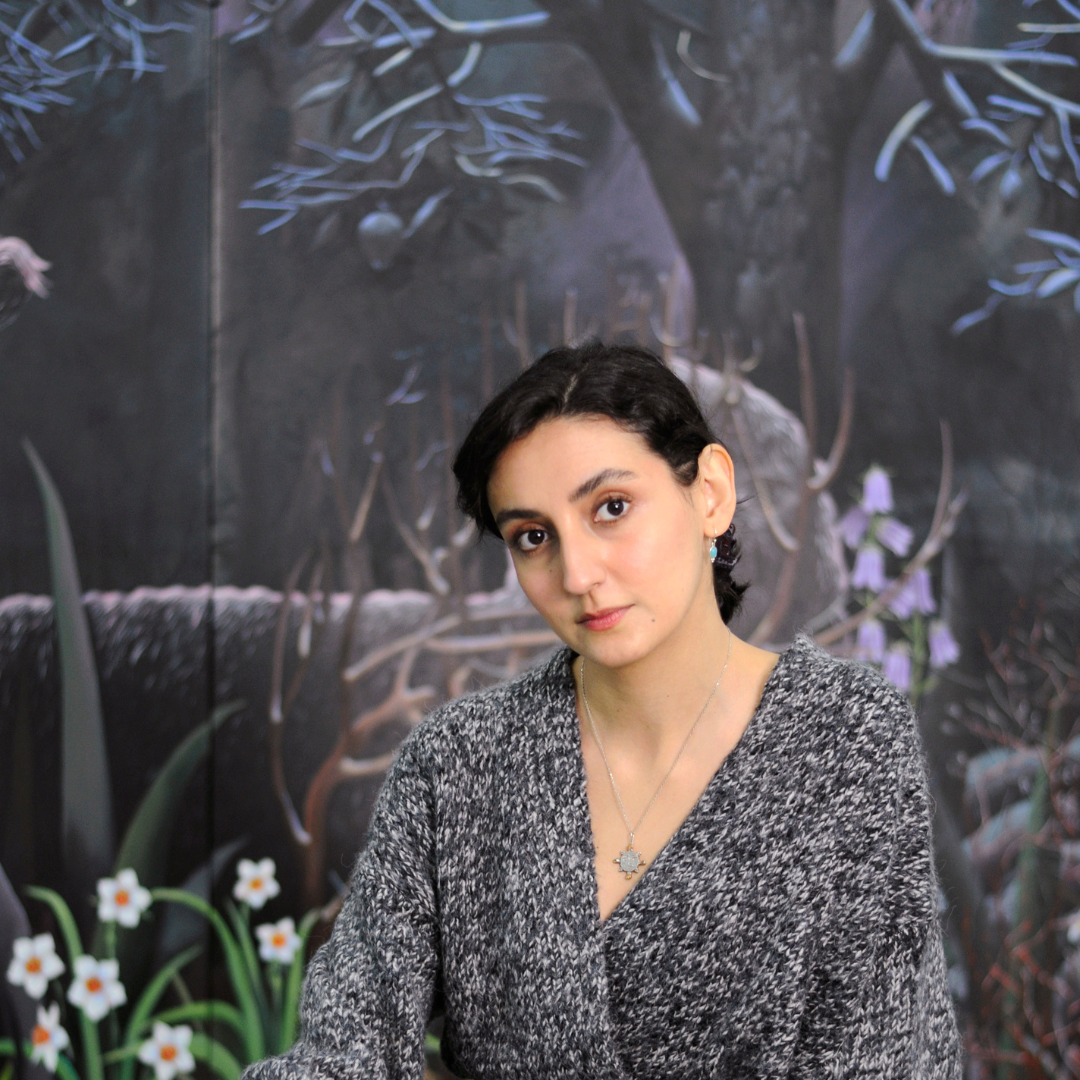
Homa Khosravi (b. Tehran, Iran) is an interdisciplinary artist based in Vancouver. She received her MFA from Simon Fraser University and BFA in Painting from the Tehran University of Art. Her work touches on surrealism, abstraction, and world-building with various “more than human” creatures through a multitude of mediums, including painting, video and sculpture installation. Khosravi reveals a dreamlike, yet deeply personal narrative shaped by her environment and lived experiences, sometimes inspired by Persian gardens and her Iranian heritage, she weaves cultural symbolism with imaginative forms and shapes.
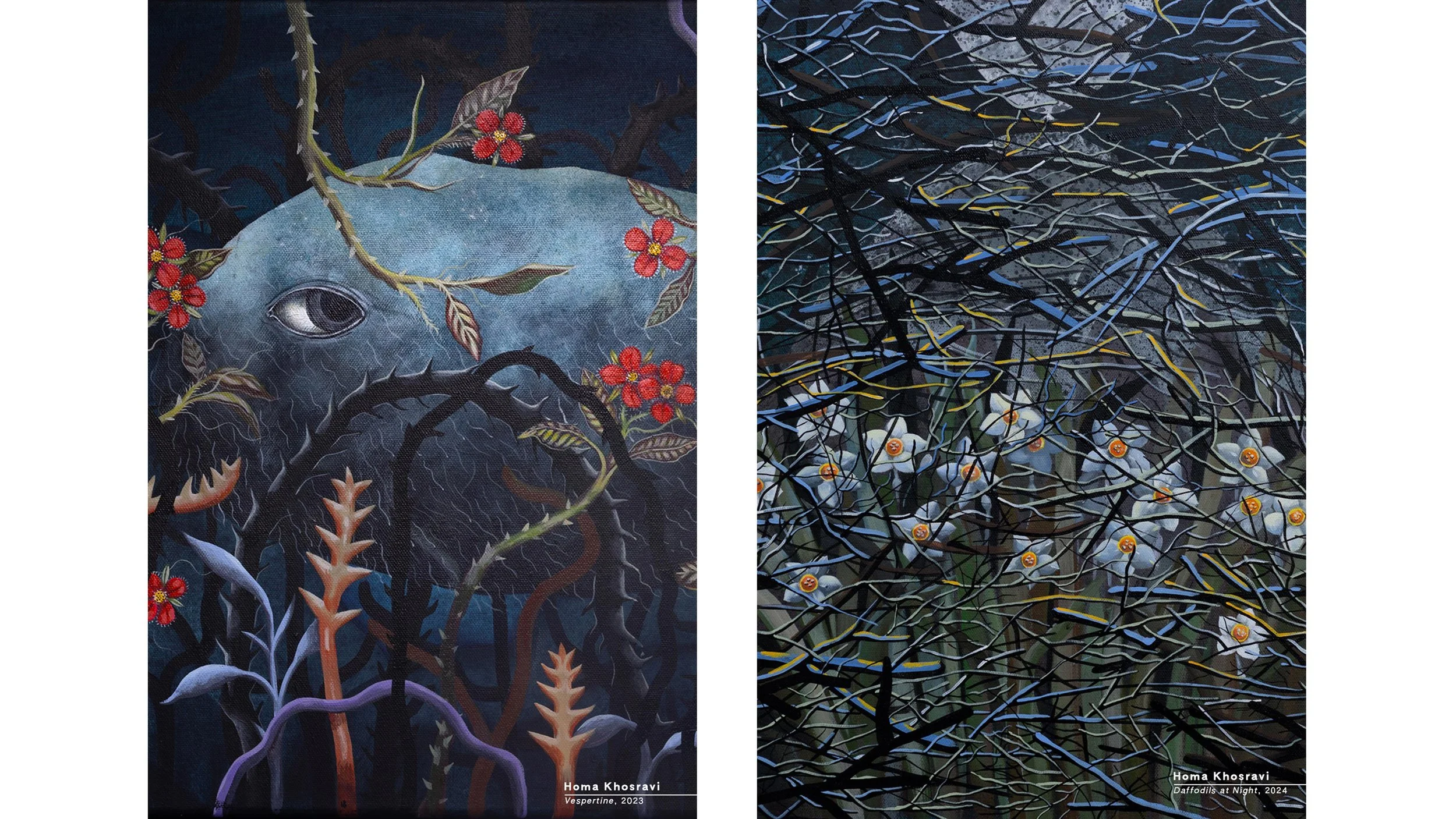
In this body of work, I am investigating nighttime scenes and landscapes, offering an alternative reading of nature and the unknown. Beyond the ornamental elements and soft colours, the work presents a space of reflection on mortality and decay; formulating a space for the viewer to find the line between reality and dream under layers of forms and colours. The tangled branches act as both barriers and pathways, enclosing luminous, otherworldly flowers and creatures that embodies resilience, mystery, and transformation. Through my paintings, I explore the tension between beauty and obstruction, hope that is growing in the middle of the dark and cold winter.
As an Iranian artist, the Lunar New Year resonates with me through its shared celebration of spring, rebirth, and gathering—values that closely mirror our own traditions of Nowruz. Both cultures welcome the new year through cleansing, renewal, honouring the past, and embracing hope for what is coming. It is a meaningful reminder of how deeply we are all connected regardless of our culture, all gravitating toward the same impulses: building community, sharing love, and celebrating together.
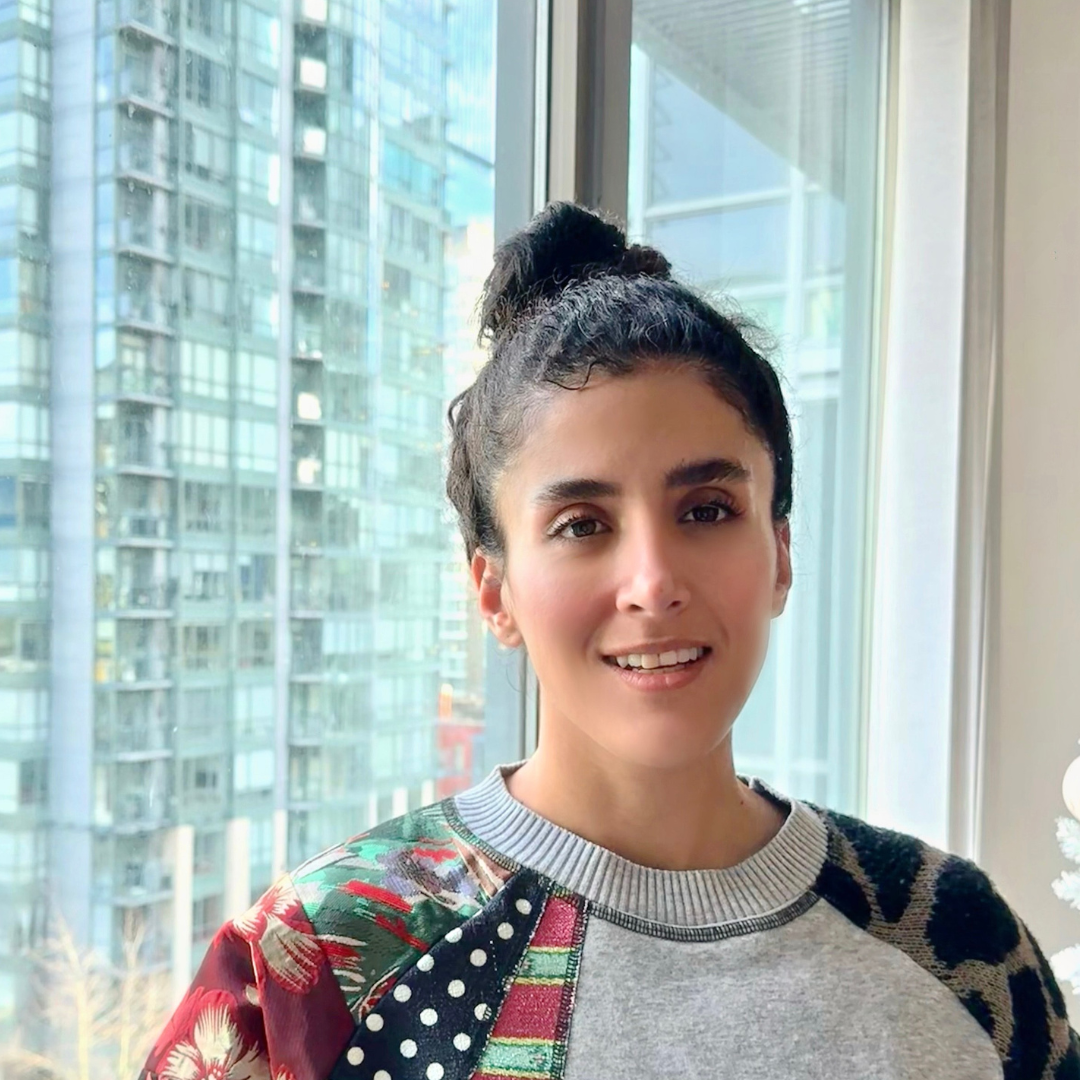
Golnaz Kiany (b. 1988, Iran) is an Iranian-Canadian figurative artist. She holds a BA in Painting from Sooreh University, Tehran (2013). Her training includes mentorship in figurative painting under acclaimed Iranian master painter Mehrdad Mohebali, which has strongly informed her approach to the human figure, gesture, and movement. Her practice engages with universal themes of memory, time, and identity, reflecting her personal negotiations with the experience of loss and belonging. Over the past decade, Kiany’s work has been exhibited in Tehran, London, Toronto, Vancouver, and New York. She currently lives and works in Vancouver, BC.
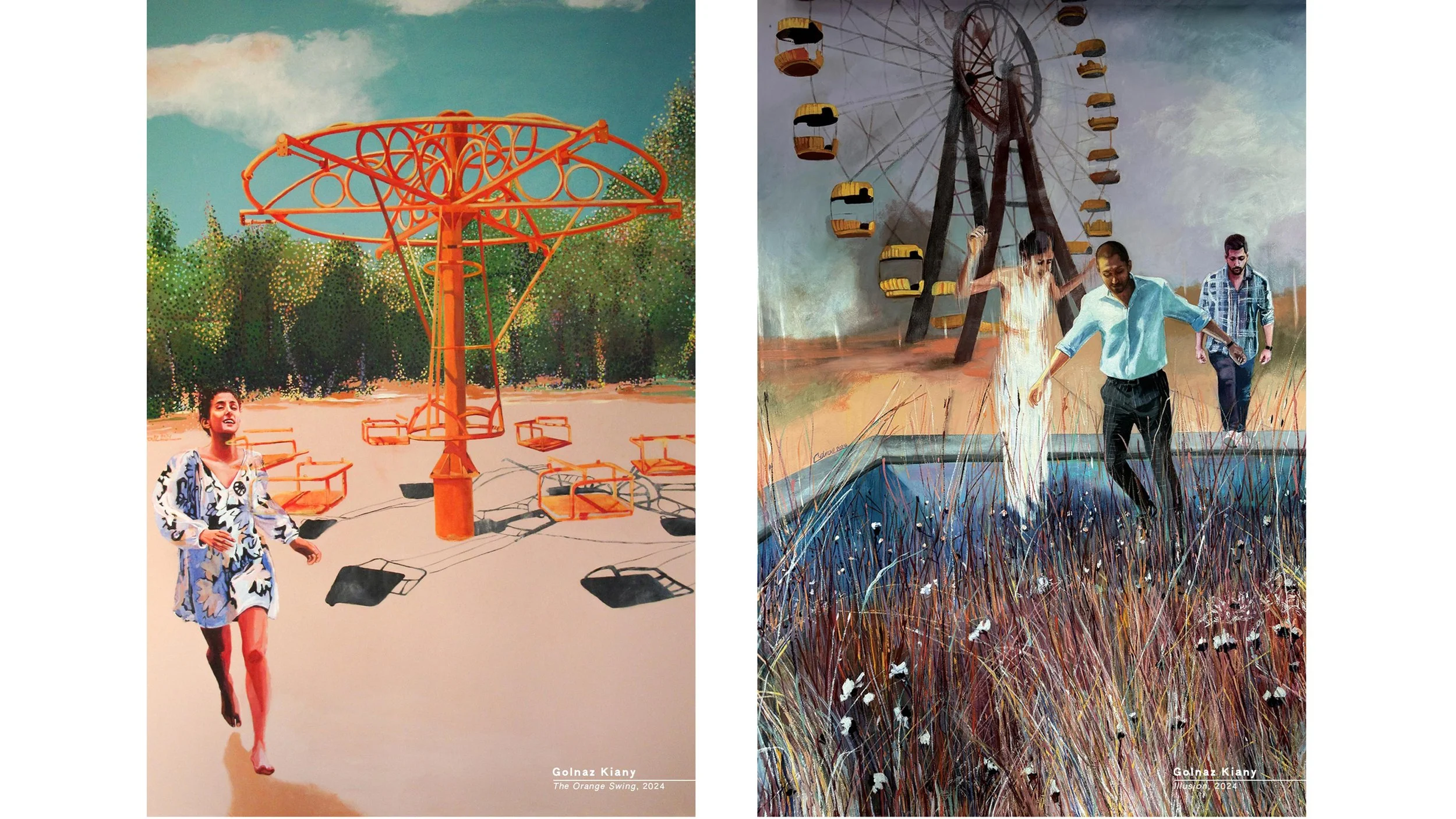
In her recent series, Silent Generation, Kiany explores feelings of nostalgia in relation to the layered realities of contemporary life. Often incorporating self-representations situated within familiar childhood environments, her paintings evoke a tension between a longing for the past and a desire to reimagine the future. By drawing on the joy, simplicity, and energy of childhood, Kiany proposes a way of moving through adulthood that embraces memory as a source of renewal rather than retreat.
Within the paintings, familiar scenes unfold: a vivid orange swing recedes into the background as a girl runs freely in the foreground, brimming with carefree energy; in another, a bright yellow Ferris wheel rises behind three joyful adult figures who leap and play beneath a clear sky. Kiany reimagines these subjects through the carefree rhythms and emotional textures of her early memories, allowing joy and movement to surface—reclaiming the fearless vitality of childhood as a way of facing uncertainty with resilience
and hope.
The Lunar New Year—marking the Year of the Horse and the theme Brave the Wind—resonates deeply with this sense of momentum and transformation. The horse symbolizes courage, speed, and a bold charge into the unknown—qualities echoed in the running girl and leaping figures that populate Kiany’s paintings.
In this Lantern City installation, Kiany invites viewers to pause amid the glowing lanterns and carry forward a spark of the same playful, brave energy into the new year.
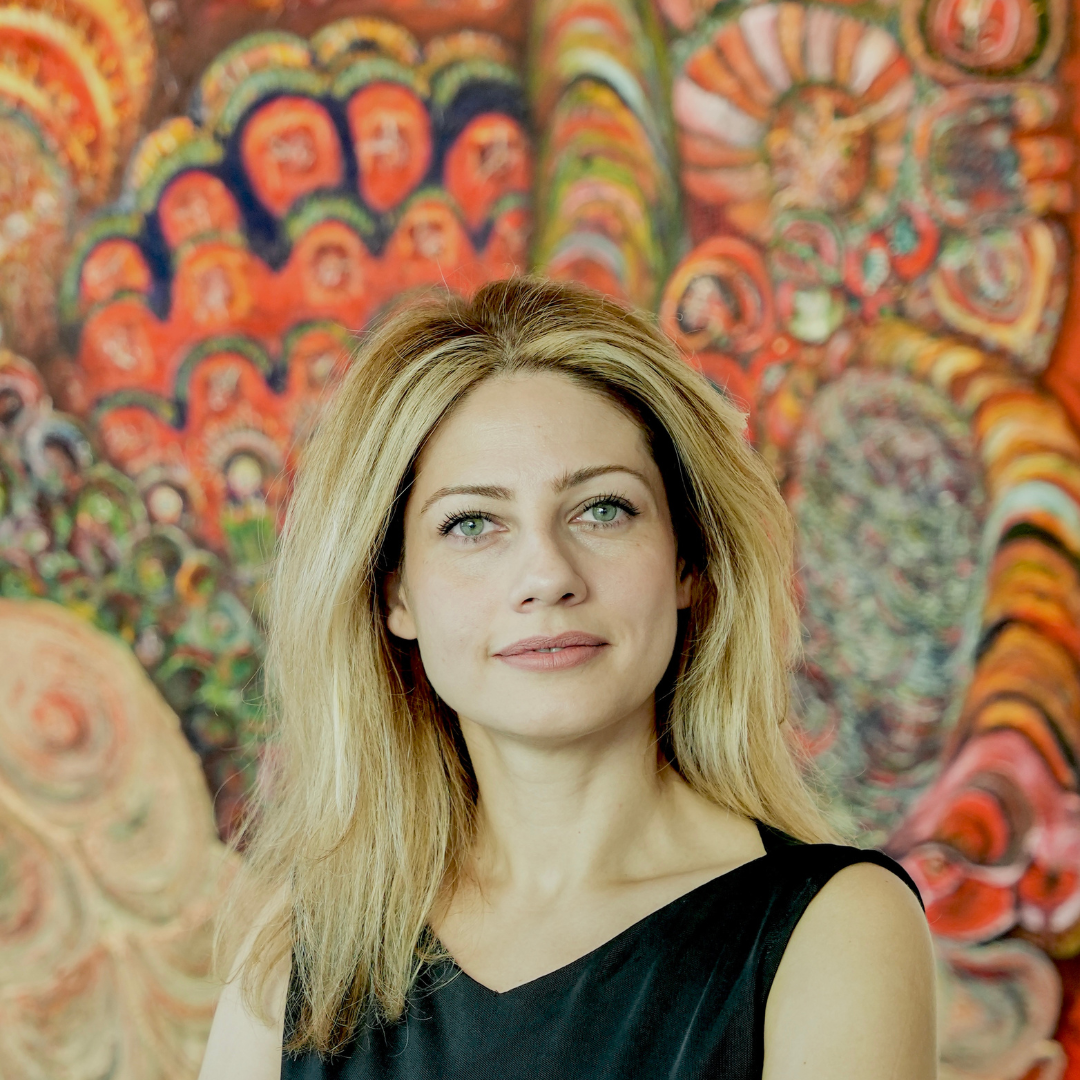
Hadis Vahidi (b. 1982, Tehran) is an Iranian-Canadian painter and sculptor based in Vancouver, known for her multidisciplinary approach that integrates oil painting on canvas and mixed media sculpture. Her work delves into the ever-evolving nature of lifeforms, exploring how forms can be experienced beyond traditional metaphors, symbols, or recognizable icons.
Vahidi’s art invites viewers to engage emotionally and sensorially, encouraging a deeper, more intuitive connection. Her sculptures build upon her painting practice, expanding it into three-dimensional space to challenge and redefine the boundaries of what painting can be.
In her work, Vahidi confronts conventional notions of beauty, skillfully blending the ‘beautiful’ and the ‘grotesque’ to craft unique, thought-provoking aesthetic experiences.
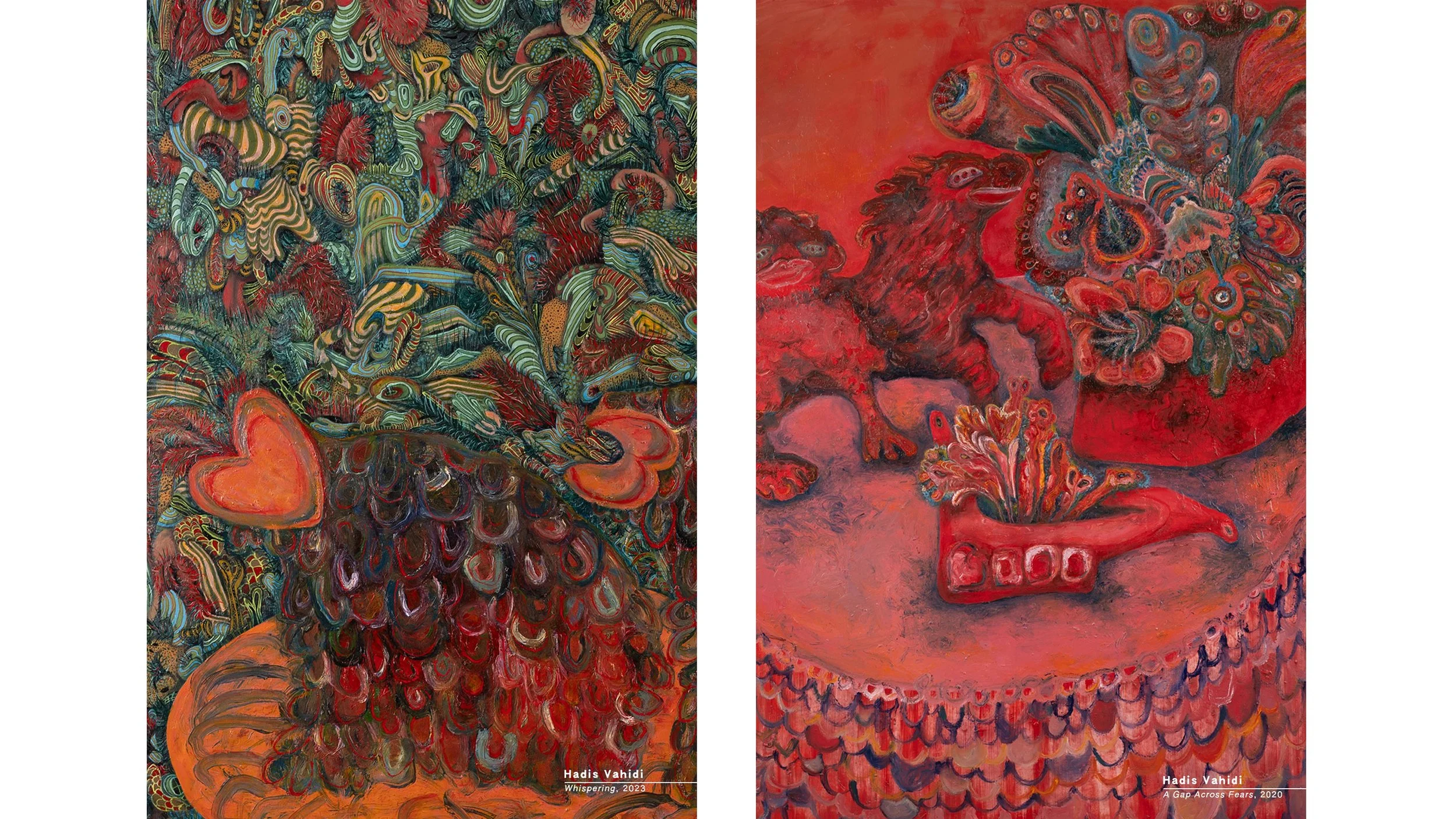
As an Iranian-Canadian artist, my relationship to Lunar New Year is rooted in renewal, not as rupture, but as transformation. It is a way of moving forward that does not deny what came before. In my practice, surfaces hold memory, marks linger, fragments resurface, and emotional residue remains embedded. These traces are not imperfections to be removed, they are evidence of passage. Nothing in the work is erased. Everything is carried, altered, and allowed
to evolve.
This sensibility echoes how traditions survive across time and geography. When cultures travel, they do not arrive untouched. They stretch, adapt, and take on new forms, yet their core persists. Lunar New Year embodies this continuity, a cyclical return that honours history while making room for change.
For me, the Lunar New Year is more than a celebration or spectacle. It is a threshold. A suspended moment between endings and beginnings, where reflection is as important as intention. It is a breath taken in awareness of weight and inheritance, a quiet, deliberate resolve to begin again, not by shedding the past, but by carrying it forward with care.